
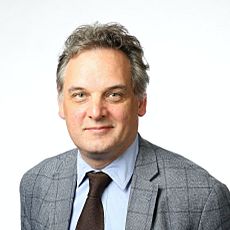
 Aptitude Health interviewed Dr Joseph Gligorov to gain his unique perspectives on recent advances in the management of breast cancer. Dr Gligorov is professor of medical oncology at Sorbonne University and medical practitioner in the Department of Medical Oncology at Tenon Hospital, Paris (AP-HP). He is currently the executive director of the University Institute of Cancerology AP-HP Sorbonne University . Regarding clinical activity, he is co-chair of the Breast Cancer Expert Center at Tenon Hospital and is mainly involved in breast cancer treatment. His clinical and translational research activity is focused on breast cancers and predictive and prognostic markers.
Dr Gligorov is also in charge of Nice-St Paul de Vence breast cancer conference and treatment guidelines, and a member of different national working groups devoted to cancer treatment strategies. He is co-founder and president of the Association of Radiotherapy and Oncology of the Mediterranean Area, devoted to cancer care improvement, innovations, and oncology education in emerging countries around the Mediterranean region. He is a member of several editorial boards, advisory committees, and national and international scientific societies. Dr Gligorov is a core faculty member of the European School of Oncology (ESO) and the European Society for Medical Oncology (ESMO), and is a member of the ESO-ESMO Metastatic Breast Cancer Task Force. He has published more than 300 journal articles (among them more than half MEDLINE indexed) and participated in the editing and writing of several books.
1. What was the most important achievement in metastatic breast cancer treatment in the last 5 years?
First are the new drugs for triple-negative breast cancer, because this part of the population treated for metastatic breast cancer did not previously have a lot of innovations. The main ones are newer precision cancer medicines and immunotherapy, including pembrolizumab in combination with chemotherapy and antibody-drug conjugate (eg, sacituzumab govitecan). Of course, we also have PARP inhibitors for a very small proportion of patients. . . . We have new things to offer, which is exciting!
We also have made progress in treating HER2+ breast cancer with new drugs, and for hormone receptor-positive patients we have CDK4/6 inhibitors, but innovations for the triple-negative population are the biggest achievement.
2. What is the biggest disappointment in terms of metastatic breast cancer treatment in the last few years?
In metastatic breast cancer, people with brain metastases (eg , leptomeningeal carcinomatosis) are usually excluded from clinical trials. We have seen some new approaches with the HER2+ population including patients with brain mets, like the tucatinib trials. However, more often this population is excluded, and we need to make more efforts to optimize the treatment of these patients.
3. Do you think brain mets are the biggest medical need, or is there something else that you think is a real unmet need in metastatic breast cancer?
I would say there are 2 major needs. Again, one is regarding strictly how we can improve the outcome and the overall survival benefit [in patients with brain mets]. I think that clearly brain mets are very challenging and we miss a lot of data and a lot of discussion about the strategy in clinical trials.
The other is we need more initiatives like Dr Fatima Cardoso’s initiative to start ESO-ESMO international consensus guidelines for advanced breast cancer (ABC) to optimize the way we exchange with patients and how we decide what is really important for the patient and what is not. The main driver of the treatment decision is our patients, and we need to try to determine the real goal of all our strategies for each of them. Sometimes it’s clearly adding quantity of life, sometimes they are more interested in quality. These different goals need to be well established, well discussed with each individual, and we need some training about the options that we have in the oldest and the youngest populations to better integrate patient wishes into our strategies.
4. Do you think we can start (or are we already) talking about cure in the metastatic setting, or is it still too early?
I don’t know what “cure” truly means. . . . If you have controlled disease but you die from another reason, you have the same life expectancy as your neighbor who does not have cancer. Even if you are treated for cancer, “cure” does not mean anything. For example, you’re never cured of hypertension. You’re never cured of diabetes. You’re never cured from a lot of chronic diseases. . . . That doesn’t mean that it’s terrible. What we wish, of course, is to stop a medication and say, “It’s finished, you don’t have disease. You’ve definitely been cured.” However, there are a lot of patients that might benefit from treatment and have a very long survival. And even if they are not cured from a biological point of view, they are cured from a potential physiological or sociological point of view, and we need to help integrate them in the overall population like the other people living with a disease that will not kill them. So, they are “cured.” We have more and more drugs that are very effective in different subtypes. That’s the case for some HER2+ patients, with very long disease control in a proportion of patients receiving anti-HER2 treatment, and the same is seen in estrogen receptor-positive populations.
5. So actually, instead of cure, we should talk about chronic disease?
I’m not comfortable either with the term “chronic disease,” but I will say that there was one very interesting paper a few years ago and on the Global Cancer Observatory for chronic myeloid leukemia. They looked at the life expectancy of patients treated for chronic myeloid leukemia, and they concluded that with treatment, those patients have the same life expectancy as the population of the same age without this disease. So this is, for me, the definition of curability.
Look what happens with HIV: these patients have multiple therapies, that doesn’t mean that it’s easy to take the treatment, but patients have a good life expectancy that is pretty similar to the overall population. They are not cured, but they could live.
So at the end of the day, chronic disease might be a terminology we use, cure might be a terminology we use. “Not life threatening,” as it was defined or imagined before, might be the better way to say it. Or, “You need to continue treatment and if you do that, it will probably not be life threatening.” That means you can have projects, you can decide about the future, and you can build your life sometimes with some more-aggressive treatments.
6. We cannot avoid questioning about the COVID situation. We know that quite a lot of treatments were changed due to COVID restrictions, etc. What do you think you can take on board for the future as treatment options even without the COVID environment? What will be absolutely unacceptable and potentially necessary to avoid in the future?
Clearly the way we work with the patient has changed; we are using more such options as telemedicine, and there are actually a lot of things that we learned to do ambulatory and that was not the case before. COVID pushed us to look differently at the patient pathway. So, telemedicine, ambulatory surgery . . . probably also not to see the patient every 3 or 4 weeks for some diseases will be from now on part of our approach. When patients are in a very stable situation, we can see them with greater intervals between visits.
Then the second thing I think it changed was the need to prioritize the patients that need urgent treatment, the patients that need to be hospitalized, and stratification of what is a real emergency compared to what isn’t.
The third one is probably the solidarity we have between the network of oncologists and oncology specialists, not only medical oncologists, but also with the other specialties, because when you have, let’s say, a cluster in your unit, some colleagues will help you to take the patient and treat them in their unit, etc. These types of networking and collaboration are very, very important!
And finally, the consideration that these patients are fragile when they are exposed to several other diseases that might be infectious. It reminds us that not only COVID, but other kinds of vaccination are very important in this population. We have learned that some prevention regarding infectious disease is clearly important, and we have probably seen fewer other types of infection during this period because we are more aware of the risk of contamination.
7. Do you think the design of future clinical trials will change, taking these learnings into account that maybe patients can avoid very frequent visits to the hospital?
We actually have a very interesting trial that is clearly addressing this. You probably know of the DECRESCENDO trial that is driven by Dr Martine Piccart, looking at how it works to deliver in the adjuvant setting a double anti-HER2 blockade at home, which is very, very important. I remember I was part of the early programs with subcutaneous trastuzumab, and it was very hard and complicated in France to move on and persuade doctors and patients to do the subcutaneous injection at home, although one of the preferences of patients is to have subcutaneous dosing. If they have to travel an hour for a 5-minute infusion or injection, it’s totally crazy. Home administration was impossible at that moment in France. Now, it’s possible. Maybe it’s due to COVID, maybe it’s not. But this kind of approach is really important and integrates 2 things: One is the great achievement we have regarding the new drugs that are very helpful to control or to cure the patient, and 2, taking into account the quality of life and the way that—even if it’s not a chronic disease—if it gives you the opportunity to live normally and have the treatment at home or at least close to home, that’s a revolution. That’s clearly a revolution, because it means that even if a patient is cured from cancer, how do we explain to them, to their family, to their parents, that they are cured, if they still come every 3 weeks or every month, or every 3 months to a cancer department? So, I think that the home delivery of some drugs . . . not only the oral treatments, but also the intravenous or subcutaneous treatments, will be very, very important and challenging for the future, and we need to think differently and reorganize our healthcare and social support systems accordingly. Some countries in northern parts of Europe have already done these kinds of things, not only in oncology, but in other types of chronic diseases. I think that for oncology, because we have new very active drugs, this will be the new challenge and for the clinical trials, of course, I will be a great supporter of these kinds of approaches.