
News & Resources

Conference Reports Deliver the Details and the Context

Exciting new developments emerge from the oncology and hematology fields constantly. While many changes unfold over time, some announcements, new discoveries, and novel products are unveiled at annual conferences. Major oncology conferences include those of the European Society for Medical Oncology (ESMO) and the American Society of Clinical Oncology (ASCO). Important hematology conferences include the meetings of the European Hematology Association (EHA) and the American Society of Hematology (ASH).

Anyone who has attended one of these conferences knows there is an enormous amount of activity at any given time. There can be considerable pressure to take full advantage of every aspect of a major conference, which, of course, is impossible to do. It is not practical to attempt to absorb insights from every poster session, presentation, vendor demonstration, and key opinion leader (KOL) talk. Tools, resources, and a reasonable strategy are key in maximizing your conference experience.

One of your top priorities for the conference should be networking. Conferences are a unique opportunity to interface with other professionals in your field. After you’ve planned time for networking, you must then determine what presentations to attend in person, and which to miss.

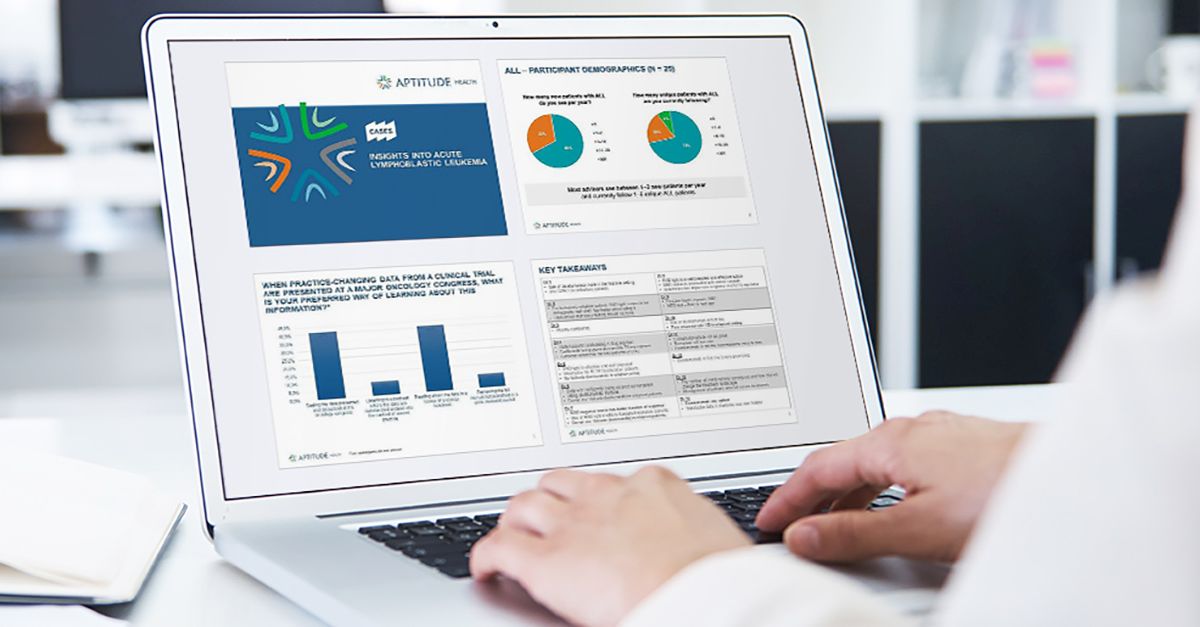
But do you need to miss out on them entirely? What if there was someone who could take notes for you, relay the key takeaways, and send you the link to the presentation slide deck? This is where conference reports come in. These publications written by industry-informed professionals supply you with an enormous amount of valuable information from the conference. They provide a summary of every talk, including the relevant literature and publications presented, as well as insights gleaned from roundtable discussions among KOLs and industry experts.

What’s more, these reports are a resource you can take with you. They are yours to read at your convenience or revisit multiple times to fully understand a concept or nuance. You can use them to share information with colleagues and report back to your employer about what was presented and what you learned.

In fact, you don’t even need to attend a conference to get a conference report. You can subscribe and get coverage of the events you were unable to attend, so you don’t miss out on anything.

Current Disease Landscape
You may have felt like you understood a disease’s landscape before the conference, but how does that change with regard to the new data and insights revealed there? The report will give you a detailed look at how the data and insights emerging from the field may impact the current treatment environment.

In the report, you’ll find relevant summaries and quantitative analyses addressing various types of applications of the new data. Discussions on the utility of different drug therapies at various stages of cancer treatment, assessments of current standard-of-care practices, and information about drug utilization are among the topics that may be covered. The implications of new data on surgery, radiology, and other disease interventions may be discussed. Conference reports cover a number of relevant applications of new data to existing solutions and issues in your area of interest.

Drug Development
Gaining insight into pharmaceutical drug development for the treatment of a particular disease may be one of your goals at a conference. Conference reports can help you collate the information from various sources that might be presented on a particular type of drug or drug family. They may offer summaries and analyses of presented data, helping you sort out the aspects that are relevant to your area of interest.
You may also comb the report for information on emerging biomarkers in your disease of interest’s pathway. The discovery of a new biomarker or pathway is often a building block for novel drug development.

Patient Management
Analyzing patient metrics in light of new data can be powerful. Your conference report may contain epidemiologic information relevant to your current industry market. This can characterize the incidence and demographics of disease, as well as the outcomes and relevance of treatment.
It may justify continuing in a certain market strategy or treatment direction. Some results from analyses may indicate the need to shift focus or try a different avenue. Either way, conference reports represent a resource to help in these assessments.

Future Treatment Directions
One of the most important insights we can glean from a conference is a sense for the direction treatment is headed and the underlying reasons driving it.
The fields of oncology and hematology evolve quickly, especially with new insights gained from clinical trials. The conclusions derived from the quantitative analyses of clinical trials and epidemiologic studies are summarized in conference reports, and the supporting data are made readily available for further analysis and discussion. Reviewing this information and absorbing the KOL insights from the roundtable discussions (the summaries of which you will also appear in your conference report) can give you confidence in understanding the direction the field is headed and the reasons for it.

The report can also help you identify potential changes in treatment practices in your particular market. You may also see patterns in some of the information, trends, or needs that are not being met. This kind of awareness can translate to new possibilities and opportunities in your market.

Strategic Recommendations for Life Sciences Companies
Overall, we look to conferences to give us a one-stop-shopping experience of information, insight, and direction in the rapidly changing oncology and hematology fields. It is both exhilarating and overwhelming to try to take in all the new information, energy, and practical guidance at once. Conference reports exist to help sort the information so we can focus on the data and ideas that are most pertinent to our area of study.

By summarizing the data from numerous presentations, discussions, and workshops, the conference reports allow us to absorb the key takeaways and use the resources to dive deeper if we need to. Ultimately, conference reports deliver quality information and practical guidance on important meetings whose coverage may have otherwise been ad hoc and spotty. This gives us the ability to translate all of this information into actionable goals for our industry, for the end benefit of patients everywhere.

Therapeutic Area

Archives

Matthew Gordon

VP, Real-World Evidence
Matthew has more than 25 years of experience in real-world evidence and observational, non-interventional research. He has led studies across the full life cycle—from startup through publication—supporting objectives that range from understanding a disease’s natural history to fulfilling global safety surveillance requirements. Matthew brings deep expertise in orphan disease programs, having overseen more than 25 long-term, global initiatives, as well as in disease and product registries, prospective pharmacoeconomic studies, and systematic literature reviews. Matthew leads the RWE Registries team, responsible for building the business and team. Prior to joining Aptitude Health, he held senior leadership roles at Parexel, Worldwide Clinical Trials, inVentiv Health Clinical, Quintiles Outcome, and ICON Clinical Research. Matthew holds a BA in sociology from Boston University, is a long-standing member of the International Society for Pharmacoeconomics and Outcomes Research (ISPOR), and is a frequent speaker at ISPOR, the Center for Business Intelligence, and related industry conferences.

Gerald Stanvitch, PhD

VP, Scientific Content

Cate Browning, PhD

VP, Global Medical Affairs

Erin Zingales Rau

VP, Account Services

Kelly Kocor

VP, People & Culture
Kelly leads both the human resources and talent acquisition teams, ensuring that Aptitude Health attracts, retains, and develops top personnel to drive our continued success. With over 17 years of experience transforming global HR initiatives, Kelly is an expert in harmonizing HR policies and fostering a culture of engagement and partnership. She is committed to partnering with all areas of the business to ensure full regulatory compliance and delivering value-added services to our organization and its people. Kelly is passionate about developing and implementing HR strategies that help support our employees’ professional and personal growth. She is dedicated to fostering a culture that encourages innovation, collaboration, and inclusivity, helping Aptitude Health continue to be a great place to work.

Bart Zygmond

VP, Finance
Bart brings a wealth of experience to the organization, having worked in the life sciences, pharmaceuticals, manufacturing, and service industries. With his expertise in financial reporting, US GAAP, SOX, cash flow modeling, and financial analysis, he plays a crucial role in the company’s financial management and strategy. Prior to joining Aptitude Health as VP, Finance, Bart held several controller positions: at Q2 Solutions, he oversaw the global finance team and financial operations, ensuring the accurate and timely financial reporting of the company. He also held controller positions at Domtar Inc and Veristat.

Eugene Vissers, MD

Senior VP, Global Scientific Content
Eugene is a seasoned medical doctor with over 20 years of international experience in pharma, consultancy, and agency environments. Eugene leads the US team of dedicated experts responsible for developing high-quality medical content. Prior to joining Aptitude Health, Eugene served as medical director at Ipsen and AstraZeneca. With both his medical degree and an MBA, Eugene brings a unique perspective to his role. His clinical background, combined with his business acumen, allows him to develop innovative strategies that drive results. Under Eugene’s leadership, the medical content team delivers scientific information of the highest quality, providing valuable insights to our clients around the world.

Adrian Barfield

VP, US Business Development

Kelley Hernandez

Executive VP, US Business Development
Kelley has over 18 years of experience in the oncology space. Kelley joined Aptitude Health after working with Cardinal Health, where she was part of the Healthcare and Analytics Division, and finished her tenure there with VitalSource™ (GPO division). As the leader of the strategic business development team for the US, Kelley brings a wealth of expertise to the organization. Her experience in the healthcare industry, combined with her ability to identify and capitalize on new business opportunities, is invaluable in driving the company’s growth and success. Kelley’s dedication to building strong relationships with life science partners is a testament to her commitment to delivering exceptional value to the healthcare industry.

Adam Sinensky, MBA

Chief Technology Officer

Adam has over 20 years of experience in the healthcare industry and an MBA in healthcare management. After 10 years as a strategy consultant to life science companies, Adam has spent the last decade as a product and strategy leader focused on bringing technology products to market across the payor, provider, and life sciences segments. By combining his business acumen and experience working directly with software developers, engineers, and data scientists, Adam has successfully led numerous product launches and enhancements from ideation to development and go-to-market initiatives. His product and change management expertise has led organizational shifts from services to technology at companies such as Change Healthcare and Datavant/Ciox. At Aptitude Health, Adam is responsible for growing our portfolio of product offerings by leveraging real-world data and artificial intelligence with our existing solutions and industry-leading Axess Network of healthcare providers. He also oversees our IT and cybersecurity teams.

Stefanie Daniels

Chief Commercial Officer

Stefanie is a seasoned healthcare executive with over 20 years of experience in oncology. She brings a wealth of knowledge and expertise to the organization. Stefanie joined Aptitude Health after spending over a decade as a senior director at Physicians’ Education Resource, an oncology CME vendor. During her tenure, she led and managed teams responsible for grant development/acquisition, program creation/execution, and faculty management. Stefanie’s deep understanding of the oncology industry and her ability to lead teams through complex projects make her a vital part of the organization’s success. Her dedication to providing high-quality solutions to our life science partners is a testament to her commitment to improving cancer patient care.

Jason Cash

Chief Financial Officer

Jason is an accomplished finance professional with over 20 years of experience in the pharmaceutical services industry. Throughout his career, he has demonstrated a keen ability to navigate high-growth organizations, delivering exceptional results. Before joining Aptitude Health, Jason served as the CFO of Veristat International, a global contract research organization. In this role, he led the financial strategy and played a pivotal role in driving the company’s growth and success. Jason’s wealth of experience and expertise in financial management make him an essential member of the leadership team. His strategic thinking and ability to drive results are highly respected within the industry.

Jez Moulding

Chief Executive Officer
Jez is a seasoned leader with over 20 years of experience in general management and regional president roles. He has a proven track record of success in the healthcare industry, having worked in the US, Japan, Australia, Korea, South Africa, France, and the UK for Sanofi, where he supported the launch of 10 new drugs across various therapeutic areas. As chief commercial officer at UDG Healthcare and EVP at Ashfield, Jez demonstrated his expertise in developing and implementing successful business strategies. He joined Aptitude Health from Pharmaspectra, an IQVIA business, where he served as CEO since 2018. Jez’s extensive experience in the pharmaceutical industry and his leadership skills make him an invaluable asset to the organization.