
News & Events

Immune Checkpoint Inhibitor Rechallenge Caused Fewer, Less Severe AEs vs Initial Treatment

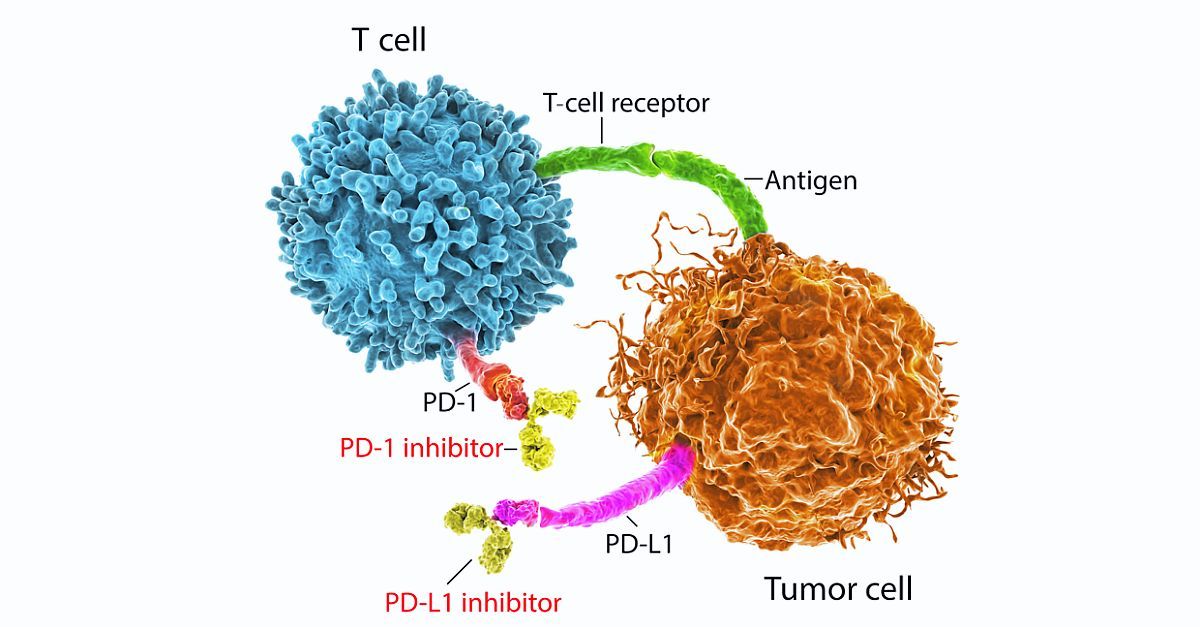
Immune checkpoint inhibitors (ICIs) have had a rapid and broad expansion of their indications in recent months and are now the standard of care for many types of cancer. ICIs promote an antitumor immune response by inhibiting cytotoxic T-lymphocyte antigen-4 (CTLA-4), programmed cell death protein 1 /ligand 1 (PD-1/PD-L1), or both. However, this mechanism of action is also associated with immune-related adverse events (irAEs) of varying degrees of severity. Grade 1 irAEs are typically managed with close monitoring, while grade 2 or higher irAEs may require corticosteroids and ICI discontinuation. Some patients with grade 2 or 3 irAEs are able to resume ICI treatment, but current guidelines recommend permanent discontinuation of ICI for grade 4 irAEs.

To characterize the safety of ICI rechallenge after discontinuation due to irAEs, Marion Allouchery and colleagues analyzed data from 180 patients in the French pharmacovigilance database with melanoma, lung cancer, renal cell carcinoma, and other tumor types. The majority (79%) of patients received an anti–PD-1 agent; 10% received an anti–CTLA-4 and anti–PD-1 combination, 6% an anti–CTLA-4 agent, and 5% an anti–PD-L1 agent. Gastrointestinal disorders were the most frequent reason for previous ICI discontinuation, followed by endocrine disorders, hepatitis, respiratory disorders, and skin disorders. Most irAEs leading to discontinuation were grade 2 (52%) or grade 3 (46.5%), with only 1.5% of patients reporting grade 4 irAEs. Median time to rechallenge was 56 days.

There were fewer irAEs following ICI rechallenge; 61% of patients did not experience recurrent grade 2 or higher irAEs after ICI rechallenge. Of the 70 patients (38.9%) who did experience an irAE, most (65%) were grade 2. Grade 3 irAEs were less frequent after rechallenge vs initial treatment, suggesting that ICI rechallenge was not associated with more-severe irAEs. Interestingly, the rates of irAE recurrence were lower among patients rechallenged with the same ICI drug or ICI combination. Also notable, patients with initial gastrointestinal irAEs were more likely to have recurrent irAEs after rechallenge; in contrast, endocrine irAEs were less likely to recur. Median duration from ICI discontinuation to rechallenge and severity of the initial irAE were not predictive of recurrent irAEs after rechallenge. In the majority of patients with an irAE, the second irAE was a recurrence of the first. In about one-quarter of the patients, the second irAE was a new irAE.

Most patients required systemic corticosteroids, and 76.6% of second irAEs resolved to grade 1 or lower. However, 67% of patients with recurrent irAEs discontinued ICI treatment. The authors caution that ICI rechallenge may not be appropriate in patients with a grade 4 irAE or in those who have had neurologic or cardiac irAEs.

High level
The results of this study highlight the value of reporting databases to further characterize the safety profile of ICIs. In this study, a majority of patients who discontinued ICI treatment for grade 2 or higher irAEs received ICI rechallenge with no or few recurrent irAEs. Further prospective studies are needed to help identify risk factors that may influence patient outcomes after ICI rechallenge, inform clinician decision-making, and support future updates to treatment guidelines.

Ground level
In this analysis, ICI rechallenge was not associated with more-severe recurrent irAEs, and appears to be safe under close monitoring, especially in patients who experienced endocrine irAEs with first ICI treatment. However, additional research is needed to further clarify risk factors for recurrent irAEs in patients receiving ICI rechallenge. ICI rechallenge should always be discussed in a multidisciplinary team review of the anticipated benefits, patient comorbidities, and risk of recurrence of first irAEs.

Therapeutic Area

Archives

Matthew Gordon

VP, Real-World Evidence
Matthew has more than 25 years of experience in real-world evidence and observational, non-interventional research. He has led studies across the full life cycle—from startup through publication—supporting objectives that range from understanding a disease’s natural history to fulfilling global safety surveillance requirements. Matthew brings deep expertise in orphan disease programs, having overseen more than 25 long-term, global initiatives, as well as in disease and product registries, prospective pharmacoeconomic studies, and systematic literature reviews. Matthew leads the RWE Registries team, responsible for building the business and team. Prior to joining Aptitude Health, he held senior leadership roles at Parexel, Worldwide Clinical Trials, inVentiv Health Clinical, Quintiles Outcome, and ICON Clinical Research. Matthew holds a BA in sociology from Boston University, is a long-standing member of the International Society for Pharmacoeconomics and Outcomes Research (ISPOR), and is a frequent speaker at ISPOR, the Center for Business Intelligence, and related industry conferences.

Gerald Stanvitch, PhD

VP, Scientific Content

Cate Browning, PhD

VP, Global Medical Affairs

Erin Zingales Rau

VP, Account Services

Kelly Kocor

VP, People & Culture
Kelly leads both the human resources and talent acquisition teams, ensuring that Aptitude Health attracts, retains, and develops top personnel to drive our continued success. With over 17 years of experience transforming global HR initiatives, Kelly is an expert in harmonizing HR policies and fostering a culture of engagement and partnership. She is committed to partnering with all areas of the business to ensure full regulatory compliance and delivering value-added services to our organization and its people. Kelly is passionate about developing and implementing HR strategies that help support our employees’ professional and personal growth. She is dedicated to fostering a culture that encourages innovation, collaboration, and inclusivity, helping Aptitude Health continue to be a great place to work.

Bart Zygmond

VP, Finance
Bart brings a wealth of experience to the organization, having worked in the life sciences, pharmaceuticals, manufacturing, and service industries. With his expertise in financial reporting, US GAAP, SOX, cash flow modeling, and financial analysis, he plays a crucial role in the company’s financial management and strategy. Prior to joining Aptitude Health as VP, Finance, Bart held several controller positions: at Q2 Solutions, he oversaw the global finance team and financial operations, ensuring the accurate and timely financial reporting of the company. He also held controller positions at Domtar Inc and Veristat.

Eugene Vissers, MD

Senior VP, Global Scientific Content
Eugene is a seasoned medical doctor with over 20 years of international experience in pharma, consultancy, and agency environments. Eugene leads the US team of dedicated experts responsible for developing high-quality medical content. Prior to joining Aptitude Health, Eugene served as medical director at Ipsen and AstraZeneca. With both his medical degree and an MBA, Eugene brings a unique perspective to his role. His clinical background, combined with his business acumen, allows him to develop innovative strategies that drive results. Under Eugene’s leadership, the medical content team delivers scientific information of the highest quality, providing valuable insights to our clients around the world.

Adrian Barfield

VP, US Business Development

Kelley Hernandez

Executive VP, US Business Development
Kelley has over 18 years of experience in the oncology space. Kelley joined Aptitude Health after working with Cardinal Health, where she was part of the Healthcare and Analytics Division, and finished her tenure there with VitalSource™ (GPO division). As the leader of the strategic business development team for the US, Kelley brings a wealth of expertise to the organization. Her experience in the healthcare industry, combined with her ability to identify and capitalize on new business opportunities, is invaluable in driving the company’s growth and success. Kelley’s dedication to building strong relationships with life science partners is a testament to her commitment to delivering exceptional value to the healthcare industry.

Adam Sinensky, MBA

Chief Technology Officer

Adam has over 20 years of experience in the healthcare industry and an MBA in healthcare management. After 10 years as a strategy consultant to life science companies, Adam has spent the last decade as a product and strategy leader focused on bringing technology products to market across the payor, provider, and life sciences segments. By combining his business acumen and experience working directly with software developers, engineers, and data scientists, Adam has successfully led numerous product launches and enhancements from ideation to development and go-to-market initiatives. His product and change management expertise has led organizational shifts from services to technology at companies such as Change Healthcare and Datavant/Ciox. At Aptitude Health, Adam is responsible for growing our portfolio of product offerings by leveraging real-world data and artificial intelligence with our existing solutions and industry-leading Axess Network of healthcare providers. He also oversees our IT and cybersecurity teams.

Stefanie Daniels

Chief Commercial Officer

Stefanie is a seasoned healthcare executive with over 20 years of experience in oncology. She brings a wealth of knowledge and expertise to the organization. Stefanie joined Aptitude Health after spending over a decade as a senior director at Physicians’ Education Resource, an oncology CME vendor. During her tenure, she led and managed teams responsible for grant development/acquisition, program creation/execution, and faculty management. Stefanie’s deep understanding of the oncology industry and her ability to lead teams through complex projects make her a vital part of the organization’s success. Her dedication to providing high-quality solutions to our life science partners is a testament to her commitment to improving cancer patient care.

Jason Cash

Chief Financial Officer

Jason is an accomplished finance professional with over 20 years of experience in the pharmaceutical services industry. Throughout his career, he has demonstrated a keen ability to navigate high-growth organizations, delivering exceptional results. Before joining Aptitude Health, Jason served as the CFO of Veristat International, a global contract research organization. In this role, he led the financial strategy and played a pivotal role in driving the company’s growth and success. Jason’s wealth of experience and expertise in financial management make him an essential member of the leadership team. His strategic thinking and ability to drive results are highly respected within the industry.

Jez Moulding

Chief Executive Officer
Jez is a seasoned leader with over 20 years of experience in general management and regional president roles. He has a proven track record of success in the healthcare industry, having worked in the US, Japan, Australia, Korea, South Africa, France, and the UK for Sanofi, where he supported the launch of 10 new drugs across various therapeutic areas. As chief commercial officer at UDG Healthcare and EVP at Ashfield, Jez demonstrated his expertise in developing and implementing successful business strategies. He joined Aptitude Health from Pharmaspectra, an IQVIA business, where he served as CEO since 2018. Jez’s extensive experience in the pharmaceutical industry and his leadership skills make him an invaluable asset to the organization.
Aptitude Health
Privacy Overview

This website uses cookies so that we can provide you with the best user experience possible. Cookie information is stored in your browser and performs functions such as recognising you when you return to our website and helping our team to understand which sections of the website you find most interesting and useful.