
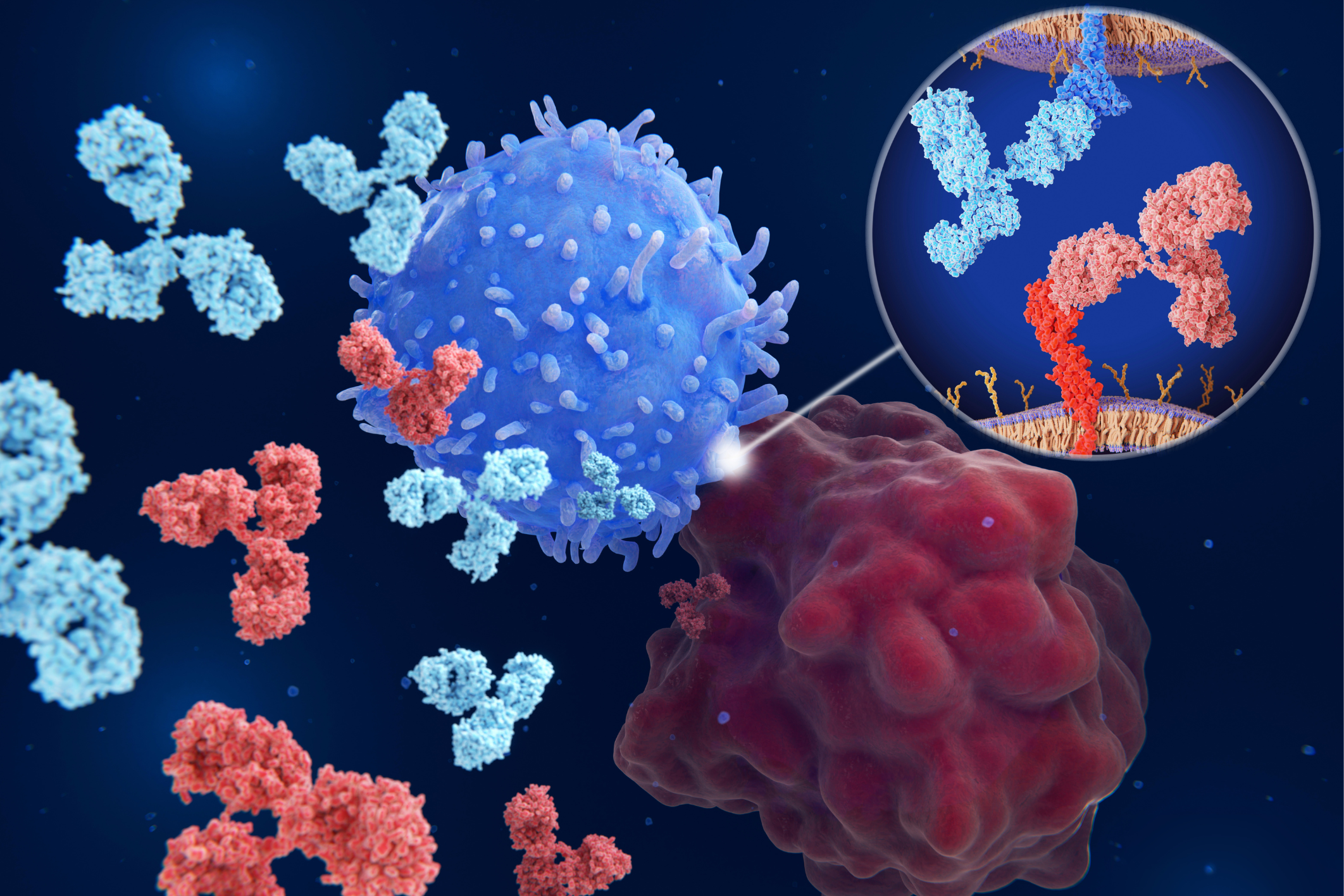
As 2025 turned from spring to summer, quiet but landmark changes took root in Australia’s Pharmaceutical Benefits Scheme (PBS): an anti–programmed cell death protein 1 (PD-1) antibody (pembrolizumab) and a dual immune checkpoint blockade combination (nivolumab + ipilimumab) were approved for reimbursement regardless of tissue of origin. For the first time in any national health system, immunotherapy thereby became available to any patient with advanced or metastatic cancer whose treating oncologist determined it to be appropriate. Although pan-tumor indications have been approved for immunotherapies in other markets, this marks the broadest national health system reimbursement authorization to date for cancer immunotherapies.
In their commentary published in the Journal of Clinical Oncology (October 2026), Vivek Subbiah, MD, of Stanford Cancer Institute, and Razelle Kurzrock, MD, of the Medical College of Wisconsin Cancer Center, argue that these reimbursement approvals represent not just an incremental policy update, but a fundamental reimagining of how health systems should evaluate, approve, and fund cancer therapeutics—shifting the axis from organ-of-origin to tumor-agnostic indications. As such, they applaud Australia’s pan-tumor PBS listing for operationalizing molecular equity at the national payor level for the first time anywhere in the world. Subbiah and Kurzrock propose 5 issue-based arguments in support of global adoption of such pan-tumor immunotherapy reimbursement.
Issue 1: Segregation by Tissue of Origin Creates Inequities
For decades, cancer drug reimbursement has mirrored cancer classification by organ of origin. Thus, a patient with a rare carcinoma of unknown primary has been historically excluded from the very therapies that, in a common cancer sharing the same molecular/immune microenvironment, are standard of care. The authors argue that immune checkpoint inhibitors such as nivolumab, ipilimumab, and pembrolizumab do not recognize an organ of origin before releasing a T cell; they respond to the tumor’s immune context. Therefore, molecular/immune profile—not tumor histology—should govern treatment access.
Issue 2: The Evidence – the NCI/SWOG S1609 DART Basket Trial
Randomized trials establishing the efficacy of dual checkpoint inhibition in melanoma, non-small cell lung cancer, and microsatellite instability-high (MSI-H) colorectal cancer formed the foundation for regulatory approvals by the US Food and Drug Administration and international agencies. However, the authors point out that clinical evidence now extends well beyond these index indications, citing pan-tumor durable responses in the National Cancer Institute (NCI)/SWOG S1609 Dual Anti–CTLA-4 and Anti–PD-1 Blockade in Rare Tumors (DART) trial (ClinicalTrials.gov identifier: NCT02834013), the largest ever prospective, multicenter basket trial of dual immune checkpoint blockade (nivolumab + ipilimumab) for rare/ultra-rare cancers. Although cohort sizes for the specific cancers were small, the study included 798 patients with 53 rare/ultra-rare cohorts across 1,083 US sites, illustrating a consistent pattern of benefit in appropriate patients, regardless of tissue of origin for their cancers. Indeed, there is currently pan-tumor approval for pembrolizumab in the US, but coverage and costs are inconsistent.
Issue 3: Rare/Ultra-Rare Cancers and the Evidentiary Asymmetry
The authors argue that although some cancers are rare/ultra-rare, they together account for 20%–25% of all diagnoses and >25% of cancer deaths, making them collectively common. These cancers are also more frequent in young adults, their rates are rising rapidly, and patients afflicted with them often have few if any approved therapies and access to even fewer (often no) clinical trials. The authors believe that cancer tissue of origin-specific reimbursements incentivize industry to focus on cancer types with the highest frequency, leaving patients with rare/ultra-rare cancer permanently at the back of the queue for drug development. They argue that granting universal use in appropriate patients would allow for linking PBS prescribing records to cancer registry and mortality data for near-complete population-level capture that no single trial could achieve.
Issue 4: Clinical Judgment as the Appropriate Gating Mechanism
The architecture of the Australian PBS listing places eligibility determination with the treating physician—an oncologist with direct knowledge of the patient’s tumor biology, treatment history, performance status, and immune-related comorbidity risk. The Medical Oncology Group of Australia supported this framework, recognizing that clinical judgment in complex cancer care is irreplaceable by any algorithmic reimbursement criterion. The authors argue that the alternative—continuing to deny therapy because a bureaucratic pathway has not been cleared—is not a safer or more equitable option; it is a decision by policy to treat only those cancers for which commercial sponsors have assembled submissions.
Issue 5: Immunotherapy Generics and the Window of Universal Access
Multiple biosimilars are in advanced development, and within the next few years these agents will become generic commodities, with cost barriers collapsing dramatically. The authors believe that the pan-tumor PBS framework Australia has established will function as the reimbursement infrastructure into which biosimilar products can slot without requiring renegotiation of the fundamental question of indication scope. Instead of just solving an access problem for today, Australia is building the scaffolding for an era of cheap, broadly available immunotherapy.
Addressing the Biomarker Critique
An important critique of pan-tumor immunotherapy reimbursement without mandatory predictive biomarker selection is the risk of exposing patients to immune-related adverse events who are biologically unlikely to respond. Subbiah and Kurzrock engage this critique directly. While the authors personally favor biomarker-based approvals in cancer, they note that immunotherapies involve many unknowns that are difficult to predict. Tumor mutational burden (TMB)-high, MSI-H, and PD-1 ligand 1 (PD-L1) immunohistochemistry may predict response, but they are imperfect; whole groups of patients, such as those with Kaposi sarcoma, are negative for all these biomarkers yet their disease is responsive. Moreover, eligibility decisions rest with oncologists, who can place the potential therapy benefits in the context of how other options might perform in each exact setting, as a check on how these decisions are being made, rather than have future use based on modeling of population-level outcomes.
Relevancy to Global Practice
Translating this framework to the fragmented US system poses challenges that Australia’s single-payor PBS partially mitigates. Many US patients already access checkpoint inhibitors through manufacturer patient assistance programs, but only fragmented and inconsistent outcomes data are collected. Solutions include making structured adverse-event and outcomes reporting a condition of reimbursement, establishing a national tumor-agnostic immunotherapy registry spanning payors, tying prior authorization to reporting compliance rather than histology, and adopting outcomes-based risk-sharing arrangements analogous to Australia’s.
In lower- and middle-income countries, as pembrolizumab and nivolumab biosimilars become available at substantially reduced cost, the absence of broad pan-tumor frameworks will perpetuate global inequities that cheap drugs alone cannot resolve. The authors believe that the framework Australia has pioneered—clinician-mediated expertise, risk-sharing arrangements, and periodic evidence review—is exportable.
High Level
In their commentary, Subbiah and Kurzrock placed a call to advocacy for high-level oncologists and administrators on behalf of patients with rare cancers. For immunotherapy, they contend that many patients who lack the positive predictive biomarkers (eg, PD-L1+ or TMB-high) still show benefit, and that there are few other options for rare cancer treatment. As trials in rare cancers are slow to accrue, they believe that broad access to immunotherapies and collection of data in registries is an effective way forward for therapy evolution.
Ground Level
For patients with rare/ultra-rare cancers who have limited treatment options, Subbiah and Kurzrock see broad access to immunotherapies as a lifeline. They believe that working to generate pan-tumor reimbursement infrastructure is timely, given the impending arrival of biosimilars. They caution that after current agents go off-patent, the policy inertia of indication-by-indication evaluation and restriction will continue, limiting access for rare and ultra-rare cancers, especially if they lack the currently required positive predictive biomarkers.